Budapest – Diplomátszerzek

Corvinus: the ecological footprint of Budapest households is incredibly high

A study by a Hungarian research team of four members was published in the journal Sustainable Cities and Society in September. It provides a novel analysis of the environmental sustainability of urbanisation in Hungary, the Budapest metropolitan area.

The ecological footprint is a measure of demand, i.e. how many hectares of land are needed to produce the materials used.

This is the so-called global hectare, a measure of the ecological footprint, which is precisely defined each year.

[kiemelt]It shows the annual productive capacity of arable land, forests and water worldwide.[/kiemelt]

The publication, made with the involvement of researchers from the Eötvös Loránd Research Network, the Regional Research Center of the Hungarian Academy of Sciences, the Széchenyi István University, and the Corvinus University of Budapest, examined the period between 2003 and 2018.

The authors found that the ecological deficit of the country as a whole has been gradually decreasing since the early 2000s, driven by population decline and an increase in biocapacity for the country as a whole. However, Budapest’s ecological resources have decreased, which may be due to environmental degradation, the shrinkage of biologically active areas caused by urbanisation and urbanisation itself.

The share of the Budapest metropolitan area, which includes the capital and its agglomeration, in Hungary’s total ecological footprint increased from 28.3 percent to 31.5 percent between 2003 and 2018.

In the agglomeration zone, however, the excess increased from 2.1 to 2.4 times. This is an increase of 7% in a decade and a half, which is not offset by the biocapacity of the ecosystem on the supply side. 

The results can help political decision-makers identify hotspots that are responsible for above-average ecological imbalances in urban regions.
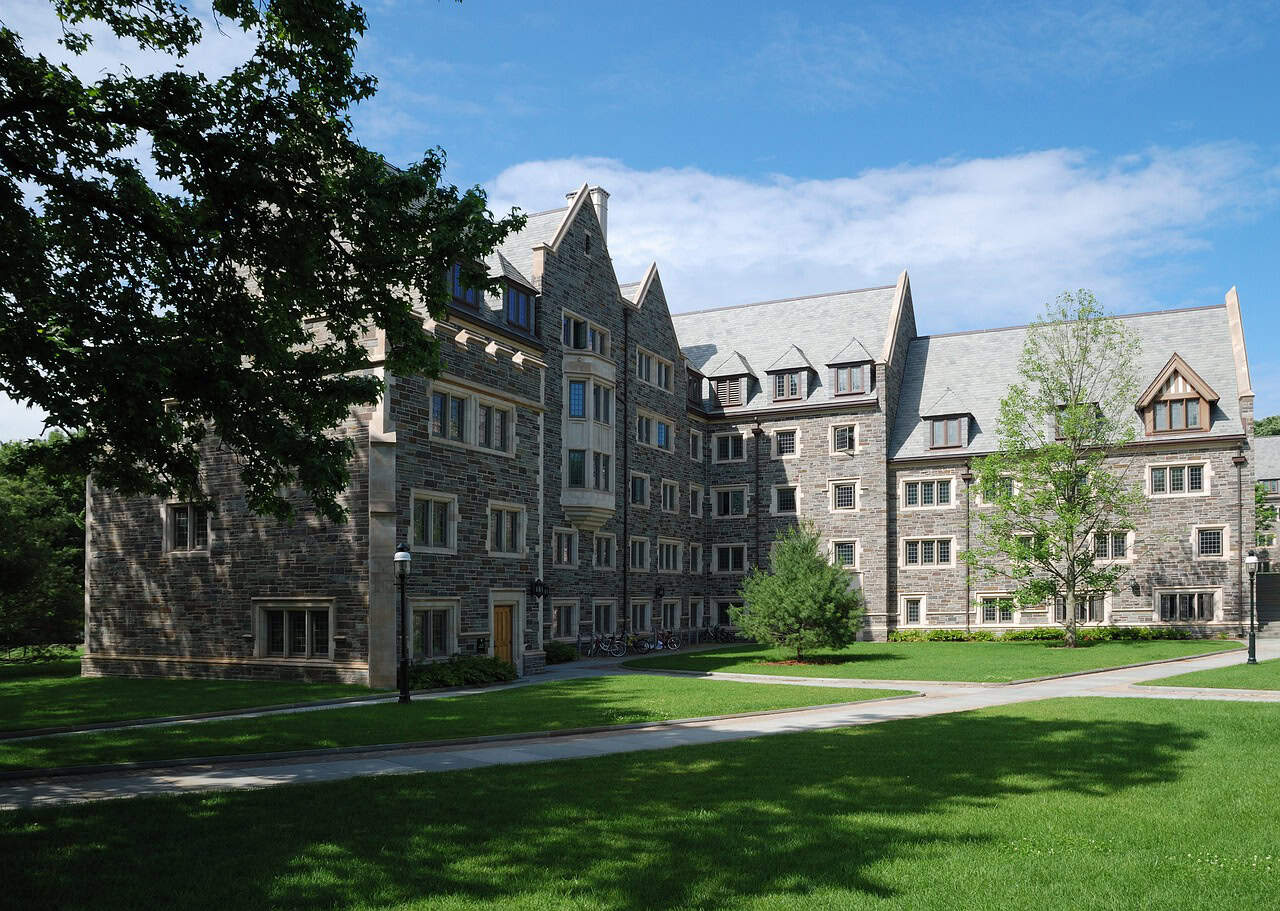

Dorm life: it’s not all sunny days!

Let’s start with the positives!

As a dorm student, you can participate more intensively in social life. Even within the dormitory itself, there are usually lots of parties, so you can quickly get to know people, expand your circle of friends and your social network.

As a dorm student, you have the advantage of being in closer contact with other upper-year students who are studying the same major as you. If you manage to build a good relationship with them, they can give you excellent tips: which teacher to choose for your course, what to expect in an exam or test, who to choose as a consultant for your thesis, which optional subjects will be a benefit. They can also give you their previous notes.

Yes, dorm is much cheaper than renting your own (or sharing) one.

If your home is really so far away from the university that it would be impossible to commute, you have two options: renting an apartment or going to a dormitory. And rent prices are sky-high, with the monthly price of a rented apartment in Budapest often exceeding the net minimum wage of an adult working graduate.
What’s more, it’s becoming more common for landlords to ask for a three-month deposit instead of two month, which can be a strain on your (or your family’s) wallet.

Here’s the downside!

You will have to constantly adapt to at least one, and in most cases three, other people. Moreover, in many cases, you don’t decide who you get to share a room with, and you may well end up with a roommate who you soon find you can’t live with.

Our Tip:

dormitory students can usually study quietly in the school library or a nearby library. Although you can’t have coffee and eat cookies there, but still the libraries are quieter than most coffee shops.

Another obstacle to successful learning is the poor wifi in many dormitories. And in today’s world, it is impossible to study without a laptop, so it can be very annoying to have to wait minutes to load a course material. And mobile internet is not cheap if you also need (or like) to watch a lot of videos.

Consider the above thoroughly before you enrol in a dormitory!

What are your dorm stories and experiences?

Share with us in the comment section!

The world’s best university cities: Budapest among the most affordable locations

Photo: 123rf

The ranking is compiled by Quacquarelli Symonds (QS), a London-based company specialising in the analysis of higher education institutions around the world. The ranking considers a range of factors including the quality of the universities, the given city’s liveability, affordability, public safety or the ratio of foreign students.

Only those cities were included to the list

This explains why only Budapest is included in the ranking from Hungary.

In this year’s QS World University Rankings, 1422 universities were included out of 2462 institutions surveyed. From Hungary there are 11 universities on the list, five of which are partly or entirely in Budapest.

Budapest universities’ positions in the QS Global University Rankings 2023, with their ranking in brackets:

From the various factors examined, Budapest earned its best position (30th) in the indicator of affordability due to its relatively low cost of living by international comparison. The authors of the survey estimate that a student’s monthly cost without rent is around $600 (HUF 240,000), while a one-bedroom apartment in the city costing around $500 (HUF 200,000) in rent.

According to the survey, tuition fees average $3,600 (about HUF 1.4 million) per year, which the list’s authors consider very affordable compared to tuition fees in other cities.

Best university cities, top 10:

  1. London
  2. Munich
  3. Seoul
  4. Zurich
  5. Melbourne
  6. Berlin
  7. Tokyo
  8. Paris
  9. Sydney
  10. Edinburgh

Source: QS Best Student Cities 2023

Budapest’s current ranking of 66th is the worst result in recent years, with the Hungarian capital ranking 58th last year and 43rd in 2019.