Corvinus launches six new English-language MA programmes in September
The five English-language master’s programmes to be launched at Corvinus are all new to higher education in Hungary. Four of the five courses will last one year instead of the usual two. The new courses:
Economic Behaviour Analysis
Diplomacy
Marketing Strategy and Innovation
Advanced Supply Chain Management
Public Governance
Economic Behaviour Analysis
It is the only two-year course among the new English-language MA programmes and is a unique programme at regional level, too. It focuses on the triad of consumer and organisational behaviour and decisions, and social and economic change.
“Our students will become high-level, interdisciplinary professionals with a range of job opportunities from HR and marketing to research roles, based on international experience” – says Corvinus press release.
Career opportunities:
HR/personnel
marketing, advertising, media, PR
decision analysis and consultancy at the companies and institutions of the competitive, non-profit and public sectors
financial services, manufacturing and commerce
education, research
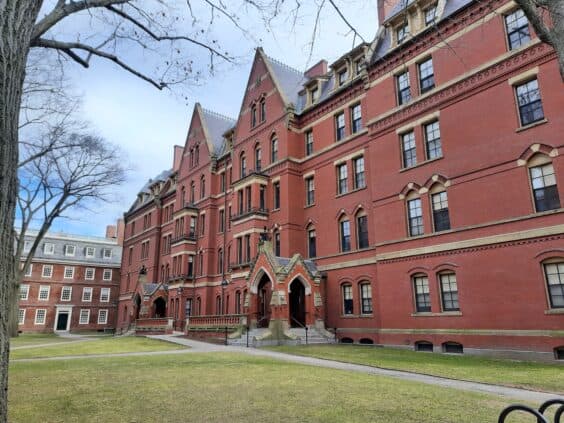
Together with the five new programmes, a total of six new English-language MA courses will be launched at Corvinus in September 2023 (Building E of Corvinus, photo: Corvinus)
Diplomacy
The one-year course will train students to become diplomats, supported not only by an intensive curriculum and compulsory work placements, but also by support for shorter study trips abroad.
Marketing Strategy and Innovation
This course is a one-year intensive version of the MA programme of Marketing. „We train future leaders who can make complex marketing strategy decisions across different sectors and types of business, in both local and international markets,” says Corvinus.
Career opportunities
Market researcher/marketing analyst
Brand/product manager
Key account manager at advertising agencies
Digital marketing specialist
Trade marketing specialist
Sales/key account manager
E-commerce expert
Media planner, purchaser
Internal communication, PR professional
Advanced Supply Chain Management
It is a one-year alternative to the master’s programme of Supply Chain Management. The objective of the programme is to train supply chain managers who understand the relations of integrated corporate logistic management and are able to control the corporate logistics system and the supply chains and networks of companies.
Public Governance
It is the one-year version of the master’s programme of Economics and Public Policy. The objective of the programme is to train economists who are able to effectively participate in community governance at local/regional, national and supranational levels.
Quarterly schedule
The new courses will run on a quarterly schedule with the advantage that students will study fewer subjects at the same time, giving them the opportunity to study a subject in more depth.
The Corvinus announcement on the launch of the new master’s courses points out that the Corvinus Scholarship is awarded for one academic year, so those studying for a one-year master’s programme in this format are guaranteed free of charge for the entire curriculum. In addition, a bachelor’s degree with an average of A grades guarantees admission to Corvinus Scholarship for the new master’s programmes.
Applications for the five new programmes can be submitted via felvi.hu. If you have already submitted your application, you can still modify it by adding new programmes or deleting existing ones until 15 February.
Two new English language courses will also be added to the BA programmes
Following Corvinus’ announcement last year, we wrote earlier that in addition to the five new courses currently offered, the university will launch three more new English-language courses from September 2023, which were not previously available in Hungary. Two of them (Philosophy, Politics, Economics and Data Science in Business) will be launched as a BA programme, while Political Economy as a MA programme.
The University of Pécs setting up a science and innovation park
The investment will be made by rebuilding and modernising two former hospital building. The two buildings will provide a total of 2,600 sqm space for seven research teams, MTI reported.
Increased cooperation with the business sector
The aim of the investment is to „intensify cooperation between PTE and the business sector, i.e. to jointly create innovations and marketable products”, vice rector József Betlehem told the PTE website in September.
At a recent press conference held at the university, it was pointed out that the location of the PTE Nyár Street site connects the different disciplines, making it an excellent base for bringing together the developments already underway and those to come.
PTE Faculty of Engineering and Information Technology. Some parts of the Science and Innovation Park will be built on the faculty’s site (Photo: PTE)
The Centre for Digital Data Analysis and Laboratory will move to the main building with several research groups. Research groups working on health and economic data analysis, secondary raw material and hydrogen technology exploitation, and research and development on smart health applications and processes will be co-located in this building, according to PTE press release.
Seven research teams will occupy the park in 2024
The former pulmonology building will be converted into the Knowledge Management Centre, which will provide the capacities and processes for the flow of university knowledge to industry and for the transfer of knowledge from industry to researchers, teachers and students.
[kiemelt]Construction started in November 2022 and is expected to be completed in autumn 2023.[/kiemelt]
Parallel to the construction works, the procurement of furniture, IT equipment and research tools needed to make the buildings functional is ongoing. The 7 research teams are expected to occupy the completed Science and Innovation Park in 2024.
Hungarian universities became members of the International Association of Science Parks
In October we reported that Óbuda University and University of Sopron are the first Hungarian higher education institutions which became a member of the International Association of Science Parks and Areas of Innovation (IASP). Besides the two universities, one more Hungarian entity, the Sport Life Science Park, founded by the Foundation for University of Physical Education, has also joined IASP.
More and more Moroccans would study at Hungarian universities
Between 2023 and 2025, the number of scholarship places for Moroccan students at Hungarian universities will increase from an annual 150 to 165. This is stated in an agreement signed by Foreign Minister Péter Szijjártó and Morocco’s minister for higher education and innovation.
Record number of Moroccan applicants
As reported by MTI, Szijjártó stressed that in addition to the continuous growth, a record number of students (1,151) from Morocco have applied to study for this academic year.
Foreign Minister Péter Szijjártó and Abdellatif Miraoui, Morocco’s minister for higher education and innovation at a press conference on 30 January. (Photo: MTI/Zsolt Szigetváry)
The rectors’ conferences of the two countries will hold a joint meeting in March. Hungarian institutions will send guest lecturers to the largest Moroccan universities and also fund joint research projects.
More than a thousand students from Turkey also study here
A few weeks ago, Péter Szijjártó signed a higher education cooperation agreement with the Turkish Minister of Education for the period 2023-2025.
Under the agreement, the Hungarian government will increase the number of scholarship places for Turkish students from 150 to 200 each year. In line with current challenges, this will include medical and nuclear training.
Hungary is now the 12th most popular foreign destination for Turkish students. More than 1,000 Turkish students are studying in Hungary this year. 16 Hungarian universities have Turkish partners with continuous exchange of lecturers and students. Two universities run a Turkology department, while Ankara University offers courses in Hungarian studies.
Nearly 42,000 foreign students study in Hungary
The number of foreign students studying in Hungary has increased significantly in recent years. According to preliminary data of the KSH (the Hungarian Central Statistical Office), in the academic year 2022-23 a total of nearly 42,000 foreign students study in Hungarian higher education.
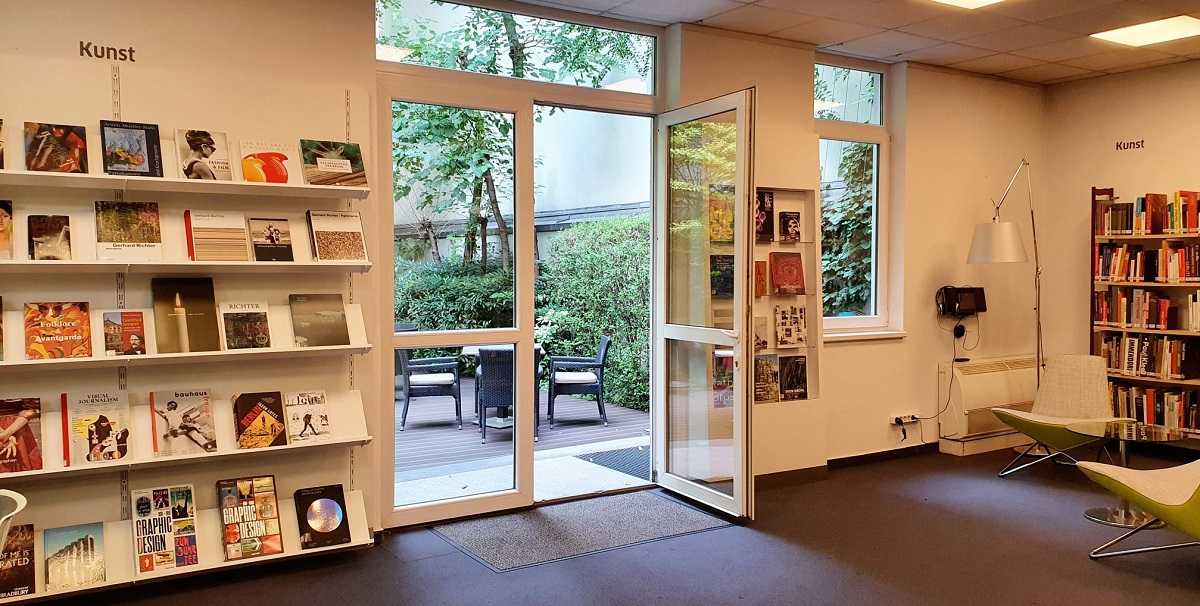
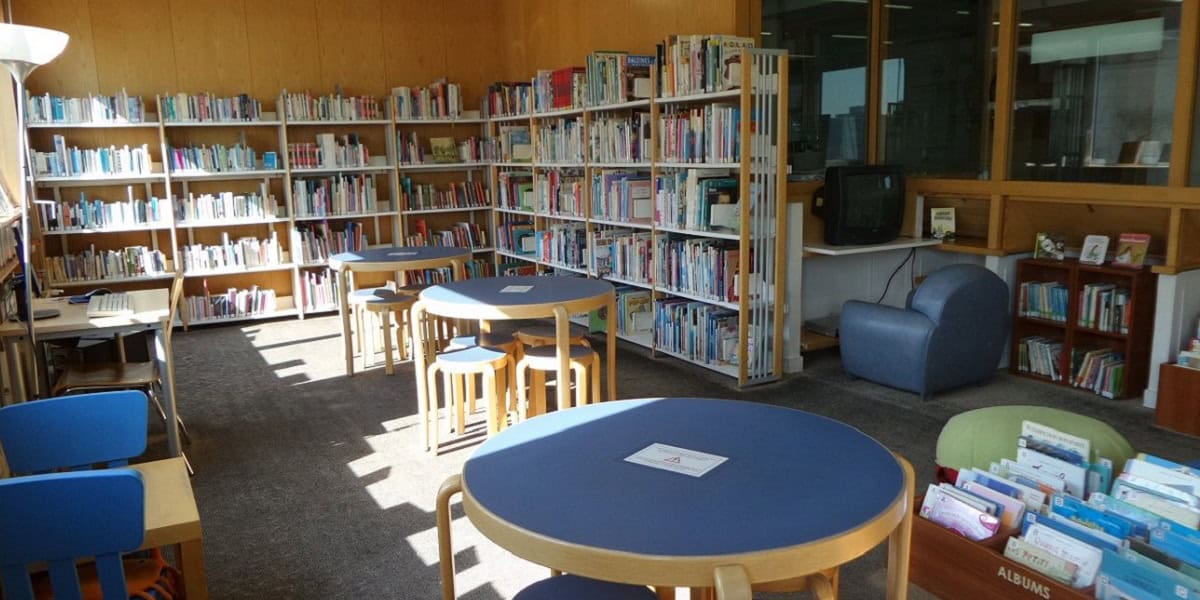
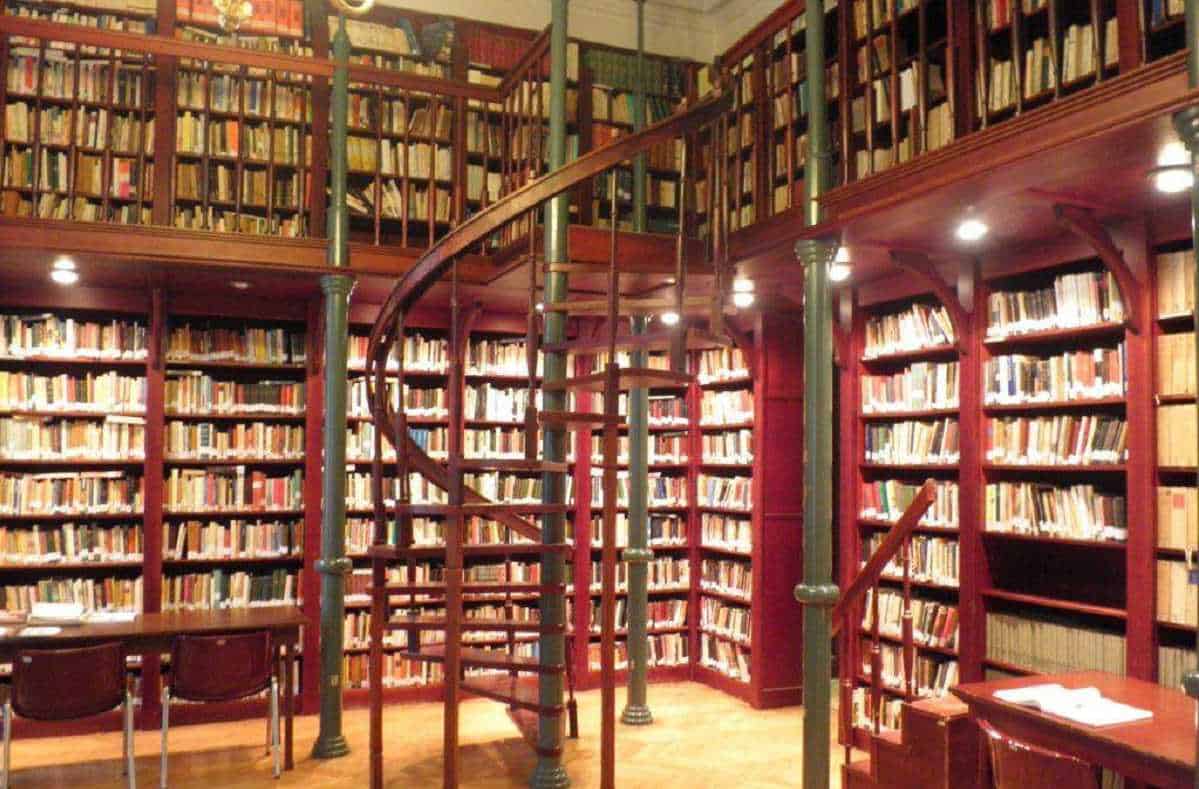
Foreign language libraries in Budapest
For a thorough thesis or a more detailed study, it’s essential to have the right, credible and even relevant sources, so it’s a good idea to have an overview of which libraries to choose from, and which documents you can find digitally and which ones only on the spot.
It is also important to know that librarians can help you a lot with your research, so don’t be afraid to approach them, after all that’s why they are there! And if you just need a quiet and cozy place to study, or perhaps you would like to read between classes, these quiet book kingdoms are still a great option.
National Library of Foreign Literature
National Library of Foreign Literature (Photo: Facebook)
The National Library of Foreign Literature and Music Collection is a public library in Budapest with two specific functions: it collects documents on contemporary world literature, music and linguistics in the original language; and it is the coordinating center for national minority libraries in Hungary. It operates as a department of the National Széchényi Library.
Website: http://www.oik.hu
Digital library: https://www.oik.hu/adatbazisok-katalogusok
Main collections: contemporary and classical literature in original language and in Hungarian translation; linguistics and literature; music (classical music, folk music, jazz, world music), musicology; literature on minorities
Complementary collections: General works, arts, reference and summary works in the related social sciences and humanities, lexical works in other disciplines, databases, dictionaries.
The library of the Central European University (CEU) holds one of the largest collections in English-language social sciences and humanities in Central and Eastern Europe.
Opening hours: Mon-Fri: 9:00 AM – 6:00 PM Sat-Sun:Closed
Library card prices
Online library card can be requested for external students: EUR 3
Collections: Monographs: predominantly in English (85%), 5% in German and Russian, and others. All are closely related to the academic programs at CEU.
Journals, theses, essays.
Legal Collection, Environmental Collection, Medieval Collection, Russian Language Collection
Media Library of the French Institute (Photo: Facebook)
The French Institute is a French state institution established to spread the French culture, which has centers in France and in many other parts of the world.
Address: 1011 Budapest, Fő u. 17. (Francia Intézet)
Opening hours: Mon: Closed
Tue-Fri:3:00 PM – 7:00 PM
Sat:10:00 AM – 2:00 PM Sun:Closed
Library card prices:
Total price for a year: HUF 6,000
Discounted price for a year for students: HUF 3,500
Free for the students enrolled in the language course of the French Institute and those enrolled in the Goethe Institute.
Collections:
The Media Library consists of 25,000 French-language documents (books, DVDs, CDs, magazines), supplemented by digital content available on tablets and VR glasses.
Address: 1088 Budapest, Bródy Sándor utca 8. (Olasz Kultúrintézet)
Opening hours: Mon-Tue: 10 AM – 1 PM and 2 PM – 6 PM
Wed:10 AM – 1 PM
Thurs:10 AM – 1 PM and 2 PM – 6 PM Fri-Sun:Closed
Library card prices:
Members of the Circle of Friends of the Italian Cultural Institute can use the traditional and digital library services.
The annual membership fee of the Circle of Friends of the Italian Cultural Institute is HUF 4,000.
There is a 50% discount for those under 26.
Students of the courses of the Italian Cultural Institute can enroll for free.
Collections:
It has 20,000 volumes, around 1,000 DVDs (mostly Italian films) and 100 CDs to help you learn the language, as well as a respectable stock of periodicals on a wide variety of subjects: literature, fiction, history, arts, music, etc.
Services: In addition to book lending, the service also includes the possibility of reading Italian and international newspapers and magazines.
Registration is not necessary for reading, viewing, and listening to the library’s material on the spot.
Annual library card: HUF 5,000
Library cards for students: HUF 3,500 per year
Collections:
The 30,000-copy collection includes books, magazines, DVDs, CDs, audiobooks, CD-ROMs, etc. are found. Manuals, dictionaries and encyclopedias. Spanish and Hispanic American literature. Materials for learning Spanish language. Works about history, art, economy, society. Children’s and youth literature. Works translated into Hungarian. Books in Catalan, Gallego, Valencian and Basque languages.
Libraries of the language institutes of Eötvös Loránd University
(Photo: Facebook)
The University Library has several member libraries in the network of libraries of the Eötvös Loránd University, which can only be used by students. The organizational units of the Faculty of Humanities include the libraries of the language institutes of ELTE, several of which can be visited.
Books about Eastern cultures are mainly available in English and Hungarian in these libraries. In the respective libraries, you will also find books and documents in the original Chinese, Japanese, Korean, Ethiopian and Indian languages.
Equal chances? Girls in higher education and beyond
We have mainly relied on data from the DPR (Graduate Career Tracking System), KSH (Hungarian Central Statistical Office) and Zyntern surveys and reports to examine the situation of sexes in education and labour market.
Money is the main factor
It is worth looking at the career prospects in different fields of training if only because money seems to be one of the main reasons to get a degree. In DPR’s 2018 survey, an overwhelming majority of respondents (75.52 per cent) cited better financial prospects as one of the reasons for applying to university.
War of sexes at campuses?
According to data for the academic year 2021/2022, 46 per cent of higher education students were male and 54 per cent were female. That means there are slightly more girls in the classes, but this proportion still could be seen as roughly even.
What is very striking, however, is the huge difference in the number of male and female students in each field of training. Girls are much more numerous in the field of education, arts, humanities, social sciences and health. Law, agriculture, economics and natural sciences are more evenly spread, while the proportion of boys is overwhelmingly high in engineering and IT.
After graduation
A glance at the KSH data on earnings shows that the average salary for women is lower than for men, and that the difference is 30 per cent for those in white-collar jobs (including graduate jobs). How is it possible that the slight predominance of girls in universities – where, in theory, we apply in the hope of better pay, among other things – does not manifest itself in equal pay?
The reasons could be varied. Students from the ‘girls’ fields of training listed above are more likely to find jobs in the public sector. They work even in positions that are not appropriate to their field of training, where they face lower salaries and even poorer career prospects than graduates working in the competitive sector. Jobs in business, IT and engineering continue to have the highest salaries, but far fewer women are pursuing careers in the latter two sectors.
Another problem may be that a survey of Zyntern shows that girls target lower salaries than boys, so that they start from a worse financial situation after a salary negotiation if they are hired.
A student of a Hungarian high school got into Harvard
In September, Ferenc Kovács will start his higher education at one of the best American universities in the world, and he even received the confirmation from Harvard before the official notification deadline.
The twelfth-grader already spent last year in Virginia, where he was offered a scholarship, and has also achieved impressive sporting results.
[kiemelt]He broke all the high school distance running records in the 800-5000 meters and also earned the title of „Best Field and Middle Distance Runner in the State of Virginia”.[/kiemelt]
After returning home, he also ran a new national U20 record in an adult race, the 1500 meters.
Harvard University (Photo: unsplash.com)
Budaörs High School is extremely proud of its graduating senior, who also passed the advanced-level English graduation exam in the fall semester.
Harvard is also in the top 10 universities that train Nobel prizewinners, and in 2021 Katalin Karikó gave a virtual lecture in the university. The biochemist, whose discoveries paved the way for the development of synthetic mRNA-based vaccine technologies for medicine, recently won the prestigious Gairdner Foundation International Prize for Medicine, which, as experts say, is a precursor to the Nobel Prize.
How to prepare consciously for your thesis even at the beginning of university
Some people are so uncertain about how to get started that they postpone their submission, even if it means delaying it. Do you feel the same way? It’s not your fault that you haven’t learnt the mysteries of writing academic papers on your own, in addition to all the other subjects. However, if you still have a few semesters left, it’s worth thinking about a few things now so that you’re not taken by surprise by the novelty of the thesis assignment.
Keep your eyes open!
During your three to five years at university, you’ll complete a range of courses, including some optional ones that ideally give you the opportunity to orient yourself around what interests you. If you keep your eyes open during the first few semesters, and keep in mind during classes or studying that one of the questions in a course could even be a thesis, you can easily find interesting topics. And even better, if you fall in love with a topic so much that you do some research on it.
Photo: Pexels
Get to know each other!
If you’re writing a thesis, you’ll also need a consultant or topic leader. You will work with this tutor for a relatively long period of time one-on-one, and if things go right, you will have several meetings. For this reason, it is a good idea to start with someone who you have a good relationship with. In a small course or conference you may have the opportunity to talk to your tutors, and ask questions if you have any. It’s the perfect opportunity to decide if they deal with topics that interest you. You’ll soon find out how engaged you are with your students.
Be active!
It does not hurt, if you have some previous experience in writing a piece of work that needs to include references to literature and has specific formal requirements. Entering academic competitions during your years of higher education is quite useful in many ways. You can gain a lot of experience, and you don’t even need to have achieved a ranking. A huge advantage is to try your skills in competitions where you have to write a longer text, possibly an essay. If you know how to get started, you’ll be able to get down to writing a thesis in the real world. What’s more, you can even use an essay written for a scientific student group conference as a thesis.
Talk to others!
What is unknown is always scary, because you don’t know what to expect, you can’t make a plan and you lack a sense of being in control. We advise you to talk to friends and acquaintances from your senior year who have experience in writing a thesis, and as many as possible, to get a fair idea of the reality. Whatever you hear, it is worth keeping in mind, just like regarding all academic gossip, that statements which are either too bad or too good are likely to be exaggerated.
EU innovation scoreboard: the best Hungarian performance is in the field of higher education
Every year, the European Commission publishes the European Innovation Scoreboard which compares the innovation and R&D performance of EU Member States across 32 indicators. Three of the 32 indicators are closely linked to higher education:
foreign doctorate students as percentage of all doctorate students;
new doctorate graduates in science, technology, engineering and mathematics (STEM) per 1000 population aged 25-34;
percentage population aged 25-34 having completed tertiary education.
Photo: 123rf
Not only for the three indicators closely related to higher education, but also for all the innovation indicators examined (e.g. R&D expenditures, broadband penetration), Hungary has achieved the best performance in the share of foreign doctorate students compared to the EU average.
The share of foreign doctorate students in Hungarian universities is around 25 per cent compared to 17.8 per cent on average in the EU (putting Hungary’s performance at 146.3 per cent of the EU average in this indicator). By comparison, Hungary’s overall innovation performance based on the 32 indicators is 69.8 per cent of the EU average.
Luxembourg has the highest share of foreign doctorate students among EU Member States, with close to 90 percent, and the Netherlands has almost 50 percent. Hungary has the highest share of foreign doctorate students among the Visegrad countries.
All knowledge in one place I. – Budapest libraries
For a thorough thesis or a more detailed study, it’s essential to have the right, credible and even relevant sources, so it’s a good idea to have an overview of which libraries to choose from, which documents you can find digitally and which ones only on the spot. Librarians will help you with your research: they will provide you with a bibliographic reference for the topics you are interested in.
Photo: pexels.com
In most libraries, you can read in the reading room, use databases and catalogs, use a computer, have wifi access for your own device and view audiovisual documents. You can also print, scan, photocopy and even laminate. Many libraries organise literature events and guided tours.
National Library of Foreign Literature
The National Library of Foreign Literature and Music Collection is a public library in Budapest with two specific functions: it collects documents on contemporary world literature, music and linguistics in the original language; and it is the coordinating centre for national minority libraries in Hungary. It operates as a department of the National Széchényi Library.
Website: http://www.oik.hu
Digital library: https://www.oik.hu/adatbazisok-katalogusok
Telephone number: +36-1-318-3688
E-mail address:
Address: 1056 Budapest, Molnár utca 11.
Opening hours:
Mon-Fri: 10:00 AM – 8:00 PM
Sat-Sun: Closed
Library card prices:
Visit: free of charge
Day ticket: HUF 600
Annual ticket: HUF 3500 Ft (with discount: HUF 1750)
Half-yearly library ticket: HUF 2000
Research ticket: HUF 6 500
Their collections:
Main collections: contemporary and classical literature in original language and in Hungarian translation; linguistics and literature; music (classical music, folk music, jazz, world music), musicology; literature on minorities
Complementary collections: General works, arts, reference and summary works in the related social sciences and humanities, lexical works in other disciplines, databases, dictionaries.
Four Hungarian universities in the Shanghai rankings of the world’s best universities
The Shanghai Ranking was first published in 2003 by Shanghai Jiao Tong University. Since 2009, the list has been issued by ShanghaiRanking Consultancy, a company specialised in higher education, which is independent from any universities or government agencies.
The list is compiled through examining the academic and research activities of more than 2,500 universities, of which 1,000 are included every year.
From Hungary, four universities have been ranked in this year’s list which was published in mid-August. Eötvös Loránd University (ELTE) and Semmelweis University (SE) have earned the best position (601-700th place).
The University of Szeged (SZTE) has gained third position (701-800th place), while the Budapest University of Technology and Economics (BME) has been ranked fourth (901-1000th place) among Hungarian universities.
Last year, the same four Hungarian universities were on the list. In 2021, ELTE and SZTE achieved the best position (601-700th place), while SE was ranked 701-800th and BME was placed 801-900th.
SZTE was again ranked as the best Hungarian university in QS list
Quacquarelli Symonds (QS) has produced an annual global ranking of higher education institutions since 2004, which evaluates universities on the basis of six criteria:
academic reputation,
employer reputation,
faculty/student ratio,
citations per faculty,
international student ratio,
international faculty ratio.
Two Hungarian universities included in the list for the first time
Eleven Hungarian universities have been evaluated in this year’s list (QS World University Rankings 2023), out of which two institutions (the University of Pannonia and Óbuda University) were included in the ranking for the first time. Among the Hungarian universities, the University of Debrecen came in second place behind SZTE, with 651-700th position in the global list. In third place there are Eötvös Loránd University and the University of Pécs, both ranked 701-750th.
Among the seven other Hungarian institutions in the list, the Budapest University of Technology and Economics, the Széchenyi István University and the Szent István University (Hungarian University of Agricultural and Life Sciences) have been ranked 801-1000th, the Corvinus University of Budapest, the University of Miskolc and the University of Pannonia have been placed 1001-1200th, while Óbuda University has earned 1201-1400th position.
Rankings of the Hungarian universities in the QS list:
1. University of Szeged: 551-560.
2. University of Debrecen: 651-700.
3. Eötvös Loránd University: 701-750.
3. University of Pécs: 701-750.
4. Budapest University of Technology and Economics: 801-1000.
4. Széchenyi István University: 801-1000.
4. Szent István University (Hungarian University of Agricultural and Life Sciences): 801-1000.
The University of Szeged (SZTE) has been positioned as the best Hungarian university in the QS rankings for more than a decade. In addition to this year’s overall ranking, SZTE has also gained Number 1 position among Hungarian universities in one of the six indicators, namely in faculty/student ratio (320th in this indicator’s global list).
UD: first position in the ratio of foreign students
The University of Debrecen (UD), ranked second among Hungarian universities (651-700th in the global ranking), has achieved the best position among Hungarian universities in the indicator of the ratio of foreign students (161st in this indicator’s list).
ELTE: first position in academic reputation
Eötvös Loránd University (ELTE), ranked third among Hungarian institutions and 701-750th in the global ranking, has earned the Number 1 position in Hungary according to the indicator of academic reputation (354th in this indicator’s list).
BME: first position in employer reputation
The Budapest University of Technology and Economics (BME), ranked 801-1000th in the global ranking, became the best Hungarian university in the field of employer reputation (464th in this indicator’s list). The BME has made progress in the indicators of academic recognition and the proportion of foreign academic staff and students compared to last year.
MIT is on the top
As for the top institutions of the global ranking, the Massachusetts Institute of Technology (MIT) has been again ranked first, meaning that MIT has been earning the top spot for more than a decade. Cambridge came in second place and Stanford in third. Oxford and Harvard have also been ranked in the top 5.
UNIside webshop
Hírlevél
Iratkozz fel hírlevelünkre!
Minden héten válogatott tartalmainak kapod meg, hogy naprakészek lehess oktatási, egyetemi, innovációs témákban.
Feliratkozás hírlevélre
Weboldalunk működtetése során a felhasználói élmény növeléséhez, illetve a jobb kiszolgálás érdekében oldalunk “cookie”-kat használ.
This website uses cookies to improve your experience while you navigate through the website. Out of these, the cookies that are categorized as necessary are stored on your browser as they are essential for the working of basic functionalities of the website. We also use third-party cookies that help us analyze and understand how you use this website. These cookies will be stored in your browser only with your consent. You also have the option to opt-out of these cookies. But opting out of some of these cookies may affect your browsing experience.
Necessary cookies are absolutely essential for the website to function properly. These cookies ensure basic functionalities and security features of the website, anonymously.
Cookie
Duration
Description
cookielawinfo-checkbox-advertisement
1 year
Set by the GDPR Cookie Consent plugin, this cookie is used to record the user consent for the cookies in the "Advertisement" category .
cookielawinfo-checkbox-analytics
11 months
This cookie is set by GDPR Cookie Consent plugin. The cookie is used to store the user consent for the cookies in the category "Analytics".
cookielawinfo-checkbox-functional
11 months
The cookie is set by GDPR cookie consent to record the user consent for the cookies in the category "Functional".
cookielawinfo-checkbox-necessary
11 months
This cookie is set by GDPR Cookie Consent plugin. The cookies is used to store the user consent for the cookies in the category "Necessary".
cookielawinfo-checkbox-others
11 months
This cookie is set by GDPR Cookie Consent plugin. The cookie is used to store the user consent for the cookies in the category "Other.
cookielawinfo-checkbox-performance
11 months
This cookie is set by GDPR Cookie Consent plugin. The cookie is used to store the user consent for the cookies in the category "Performance".
CookieLawInfoConsent
1 year
Records the default button state of the corresponding category & the status of CCPA. It works only in coordination with the primary cookie.
viewed_cookie_policy
11 months
The cookie is set by the GDPR Cookie Consent plugin and is used to store whether or not user has consented to the use of cookies. It does not store any personal data.
Functional cookies help to perform certain functionalities like sharing the content of the website on social media platforms, collect feedbacks, and other third-party features.
Performance cookies are used to understand and analyze the key performance indexes of the website which helps in delivering a better user experience for the visitors.
Analytical cookies are used to understand how visitors interact with the website. These cookies help provide information on metrics the number of visitors, bounce rate, traffic source, etc.
Cookie
Duration
Description
_ga
1 year 1 month 4 days
The _ga cookie, installed by Google Analytics, calculates visitor, session and campaign data and also keeps track of site usage for the site's analytics report. The cookie stores information anonymously and assigns a randomly generated number to recognize unique visitors.
_ga_*
1 year 1 month 4 days
This cookie is installed by Google Analytics.
_gat_gtag_UA_*
1 minute
Set by Google to distinguish users.
_gid
1 day
Installed by Google Analytics, _gid cookie stores information on how visitors use a website, while also creating an analytics report of the website's performance. Some of the data that are collected include the number of visitors, their source, and the pages they visit anonymously.
CONSENT
2 years
YouTube sets this cookie via embedded youtube-videos and registers anonymous statistical data.
Advertisement cookies are used to provide visitors with relevant ads and marketing campaigns. These cookies track visitors across websites and collect information to provide customized ads.
Cookie
Duration
Description
VISITOR_INFO1_LIVE
5 months 27 days
A cookie set by YouTube to measure bandwidth that determines whether the user gets the new or old player interface.
YSC
session
YSC cookie is set by Youtube and is used to track the views of embedded videos on Youtube pages.
yt-remote-connected-devices
never
YouTube sets this cookie to store the video preferences of the user using embedded YouTube video.
yt-remote-device-id
never
YouTube sets this cookie to store the video preferences of the user using embedded YouTube video.