sustainability Archívum | Diplomátszerzek

Do you know what responsible management education is? BGE embarks on such a project

The UN-supported Principles for Responsible Management Education (PRME) initiative was founded in 2007 as a platform to promote sustainability and help business students understand sustainability. Budapest Business School joined the PRME network in 2017.

This year, BGE was the only Hungarian higher education institution to be selected by the PRME Secretariat as a PRME Champion, along with 46 other business schools from around the world. The aim of the PRME Champions is to play a leading role in the development of management education in line with the UN Sustainable Development Goals, BGE said in a statement.

The lichen wall with the university’s name can be seen in the lobby of the BGE Faculty of Finance and Accountancy (Photo: BGE)

According to the PRME website, two other Hungarian universities are members of the network. Corvinus University of Budapest joined the initiative in 2010 and the Faculty of Business and Economics of the University of Pécs (PTE) in 2020.

Three Hungarian universities in QS sustainability ranking

We reported earlier that three Hungarian universities were included in the global sustainability ranking of the London-based QS. The Budapest University of Technology and Economics (BME) achieved the best result after being ranked 341-360 in a list of 700 universities from around the world. The list looked at sustainability from an environmental and social perspective. Of these, BME was ranked in the top 200 universities for environmental sustainability. The other two Hungarian institutions in the ranking are the University of Szeged and ELTE.

Pécs is again the greenest university in Hungary

This year, the UI GreenMetric World University Rankings, which was first compiled in 2010 at the initiative of Universitas Indonesia, has again ranked the world’s universities and their campuses on the basis of sustainability and environmental indicators.

The UI GreenMetric evaluates universities on six main criteria. These are:

  • setting and infrastructure (e.g. the amount of green space at the university or campus),
  • energy and climate change (energy efficiency, use of renewable energy sources),
  • waste management,
  • water usage,
  • transportation (green transport available on campus),
  • education and research (courses, research, publication related to sustainability).

[kiemelt]The University of Pécs has been named the greenest Hungarian university for the third year in a row, having been ranked 21st in this year’s global ranking, up from 42nd last year and 59th in 2020.[/kiemelt]

In addition to PTE, one other Hungarian university made the top 100, with the University of Szeged (SZTE) ranking 73rd. In addition to PTE and SZTE, nine other domestic universities are also ranked.
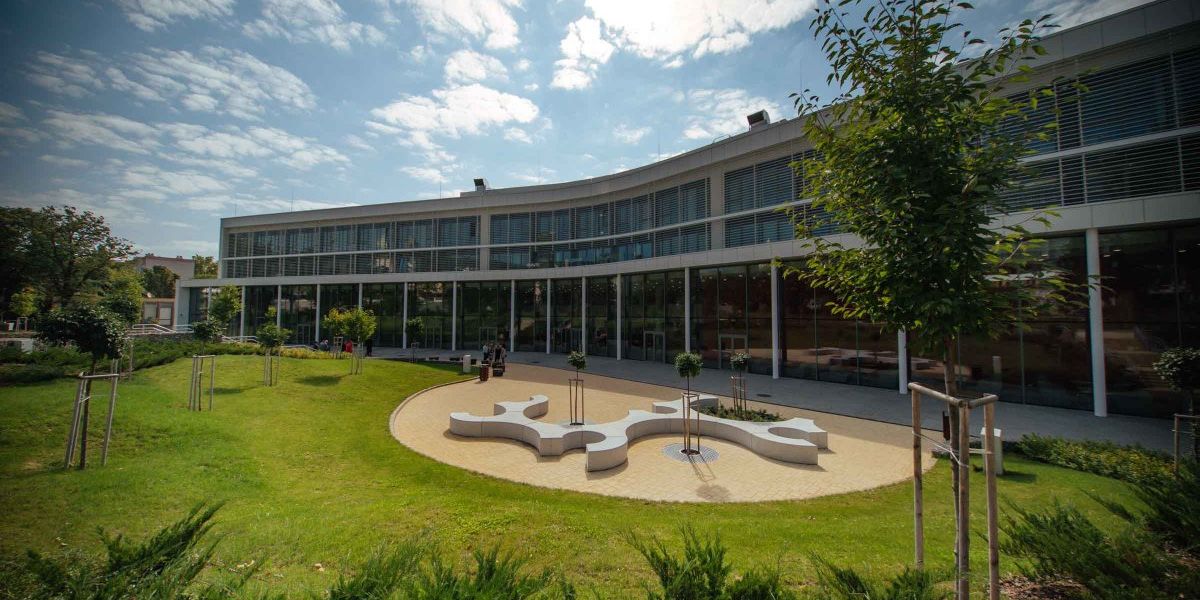
PTE’s new medical school building. PTE has been ranked the greenest university in Hungary for the third time this year (Photo: univpecs.com)

Placement of Hungarian universities in the UI GreenMetric World University Rankings:

  • University of Pécs: 21.
  • University of Szeged: 73.
  • University of Sopron: 206.
  • Eötvös Loránd University: 229.
  • University of Debrecen: 266.
  • Semmelweis University: 398.
  • University of Pannonia: 519.
  • Budapest Business School: 541.
  • Corvinus University of Budapest: 577.
  • University of Miskolc: 761.
  • Budapest Metropolitan University: 863.

Corvinus has been named the most sustainably improved university in the world

Corvinus, ranked 9th in the ranking of Hungarian universities, has also achieved a major success by being named the most sustainably improved university in the world by UI GreenMetric.

[kiemelt]Corvinus entered the ranking for the second time this year and improved almost 300 places from last year’s ranking (869th to 577th), the biggest improvement in the world in 2022.[/kiemelt]

(Last year’s most sustainable university award went to Tilburg University in the Netherlands.)

The University’s Ménesi campus, due to open next autumn, is the first higher education investment in Hungary to meet the stringent sustainability certification Leed Gold criteria and the AA+ rating for outstanding energy efficiency – Corvinus said in a press release.

The institution has launched the Corvinus Green programme, which

  • pays special attention to energy efficiency in operations,
  • optimises the utilisation of buildings to reduce overheads,
  • encourages staff to use jugs instead of plastic bottles on a voluntary basis,
  • collects unused kitchen and office electrical equipment,
  • and encourages the use of local lighting instead of general lighting where it is reasonable to do so. 

Three domestic universities have been included in the QS sustainability ranking

In early November, we reported on the performance of Hungarian universities in another global sustainability ranking. In the list compiled for the first time this year by the London-based analytical firm Quacquarelli Symonds (QS), the Budapest University of Technology and Economics (BME) was the best-ranked Hungarian university.

BME is ranked 341-360th in the list of 700 universities from around the world, which has examined sustainability from environmental and social perspectives. In environmental impact category, BME is ranked in the top 200 universities. The University of Szeged and ELTE are the other two Hungarian institutions which were included in the ranking alongside BME.


Three Hungarian universities are included in the QS sustainability ranking

Quacquarelli Symonds (QS), the London-based higher education ratings company has published its first sustainability rankings, the QS World University Rankings: Sustainability 2023. It examined the universities’ sustainability performance from environmental and social perspective, based on a total of eight indicators (three environmental and five social).

The universities’ performance was assessed on the basis of eight indicators

As for environmental sustainability, the following three indicators were evaluated:

  • sustainable institution (This indicator considers, among other things, whether a university holds membership in officially-recognised climate action or sustainability groups, has a publicly available sustainability and energy emissions report and a published commitment to achieving net zero emissions.)
  • sustainable education (alumni outcomes and academic reputation within earth, marine and environmental sciences courses, and the availability of courses that embed climate science and/or sustainability within the curriculum)
  • sustainable research (research activity around the United Nation’s Sustainable Development Goals.)

Three indicators were evaluated in environmental impact category (Photo: pexels)

Five indicators considered in relation to the social dimension of sustainability:

  • equality (This indicator assesses institutions on a variety of measures including the proportion of female students, the availability of diversity and inclusion policy, and the disability support available.)
  • knowledge exchange (commitment to knowledge transfer in collaboration with less-economically-supported institutions, and a university’s inclination to partner with other institutions.)
  • impact of education (university’s research into quality education, alumni impact and academic reputation in relevant social subjects)
  • employability and opportunities (an employer reputation score and an employment outcomes score based on how prepared students are for successful careers)
  • quality of life (commitment to wellbeing within and outside of the university; health options on campus, for example.)

Three Hungarian universities were included in the list of 700 universities from around the world. The Budapest University of Technology and Economics (BME) achieved the best position (341-360th). The other two Hungarian universities on the list were the University of Szeged (SZTE) (381-400th) and Eötvös Loránd University (ELTE) (601+).

BME in the top 200 in environmental impact category

Two separate rankings were produced based on the environmental and social aspects of sustainability. In environmental impact category, BME was ranked 198th, SZTE 360th and ELTE 501+. In social impact category, all three Hungarian universities were ranked 501+.

BME was ranked as the best Hungarian university in four of the eight indicators. In addition to the three environmental indicators, BME also scored best in a social indicator (employability and opportunities). SZTE was also ranked as the best Hungarian university in four indicators (equality, knowledge exchange, impact of education and quality of life).

We have recently reported that the University of Szeged achieved the best position (551-560th) among Hungarian universities in the QS overall university ranking, which evaluates universities on six criteria (academic reputation, employer reputation, faculty/student ratio, citations per faculty, international student ratio, international faculty ratio).