university – Diplomátszerzek

What makes your behavior perfect?

Behavior is in fact nothing more than a combination of human reactions and actions that are perceptible (visible, audible) to others. These actions reflect on the outside world, on the behavior of other people, on events.

The way a person behaves is influenced by many factors. Cultural, social, workplace expectations, family patterns, emotions, mood, stress levels and many other external parameters.

What does depend on it?

Almost everything. Behavior is closely linked to our personality, but we can change a lot, unconsciously or consciously, depending on the environment. It’s important because we form friendships and work relationships partly based on behavior.

The problem starts when a person finds it difficult to balance his/her personality with the behavior expected of him/her, and thus behaves in different ways at different places, which takes up a lot of energy. This is why one may fail in his/her career, in his/her personal life and that is why he/she may feel burnt out.

Workplace behavior – but how?

There is a growing perception that soft skills are more important than professional skills. Leading companies believe that it is useless to have an impeccable CV and perfect professional skills if you are not a team player, can not be motivated and not creative enough.

„Smiles up, stomps down”

It’s not exactly the way the saying goes in common parlance, but that’s the gist of it. It’s said of people who look only after their own interests and, in pursuit of their goals, don’t care who they run over on the road to get there.

So in a workplace, behavior is of paramount importance. You have to follow the instructions of your supervisor and not always have the option of saying no to tasks. Being humble contributes a lot to moving up the career ladder, but it is important to be clear that it does not mean you have to be humiliated.

The key lies somewhere in the happy medium: move towards your goals with a spirit of sacrifice, but don’t forget to stand up for yourself!

behavior of students makes difference in university situations


Do you know what responsible management education is? BGE embarks on such a project

The UN-supported Principles for Responsible Management Education (PRME) initiative was founded in 2007 as a platform to promote sustainability and help business students understand sustainability. Budapest Business School joined the PRME network in 2017.

This year, BGE was the only Hungarian higher education institution to be selected by the PRME Secretariat as a PRME Champion, along with 46 other business schools from around the world. The aim of the PRME Champions is to play a leading role in the development of management education in line with the UN Sustainable Development Goals, BGE said in a statement.

The lichen wall with the university’s name can be seen in the lobby of the BGE Faculty of Finance and Accountancy (Photo: BGE)

According to the PRME website, two other Hungarian universities are members of the network. Corvinus University of Budapest joined the initiative in 2010 and the Faculty of Business and Economics of the University of Pécs (PTE) in 2020.

Three Hungarian universities in QS sustainability ranking

We reported earlier that three Hungarian universities were included in the global sustainability ranking of the London-based QS. The Budapest University of Technology and Economics (BME) achieved the best result after being ranked 341-360 in a list of 700 universities from around the world. The list looked at sustainability from an environmental and social perspective. Of these, BME was ranked in the top 200 universities for environmental sustainability. The other two Hungarian institutions in the ranking are the University of Szeged and ELTE.

Corvinus launches six new English-language MA programmes in September

The five English-language master’s programmes to be launched at Corvinus are all new to higher education in Hungary. Four of the five courses will last one year instead of the usual two. The new courses:

  • Economic Behaviour Analysis
  • Diplomacy
  • Marketing Strategy and Innovation
  • Advanced Supply Chain Management
  • Public Governance

Economic Behaviour Analysis

It is the only two-year course among the new English-language MA programmes and is a unique programme at regional level, too. It focuses on the triad of consumer and organisational behaviour and decisions, and social and economic change.

“Our students will become high-level, interdisciplinary professionals with a range of job opportunities from HR and marketing to research roles, based on international experience” – says Corvinus press release.

Career opportunities:

  • HR/personnel
  • marketing, advertising, media, PR
  • decision analysis and consultancy at the companies and institutions of the competitive, non-profit and public sectors
  • financial services, manufacturing and commerce
  • education, research

Together with the five new programmes, a total of six new English-language MA courses will be launched at Corvinus in September 2023 (Building E of Corvinus, photo: Corvinus)

Diplomacy

The one-year course will train students to become diplomats, supported not only by an intensive curriculum and compulsory work placements, but also by support for shorter study trips abroad.

Marketing Strategy and Innovation

This course is a one-year intensive version of the MA programme of Marketing. „We train future leaders who can make complex marketing strategy decisions across different sectors and types of business, in both local and international markets,” says Corvinus.

Career opportunities

  • Market researcher/marketing analyst
  • Brand/product manager
  • Key account manager at advertising agencies
  • Digital marketing specialist
  • Trade marketing specialist
  • Sales/key account manager
  • E-commerce expert
  • Media planner, purchaser
  • Internal communication, PR professional

Advanced Supply Chain Management

It is a one-year alternative to the master’s programme of Supply Chain Management. The objective of the programme is to train supply chain managers who understand the relations of integrated corporate logistic management and are able to control the corporate logistics system and the supply chains and networks of companies.

Public Governance

It is the one-year version of the master’s programme of Economics and Public Policy. The objective of the programme is to train economists who are able to effectively participate in community governance at local/regional, national and supranational levels.

Quarterly schedule

The new courses will run on a quarterly schedule with the advantage that students will study fewer subjects at the same time, giving them the opportunity to study a subject in more depth.

The Corvinus announcement on the launch of the new master’s courses points out that the Corvinus Scholarship is awarded for one academic year, so those studying for a one-year master’s programme in this format are guaranteed free of charge for the entire curriculum. In addition, a bachelor’s degree with an average of A grades guarantees admission to Corvinus Scholarship for the new master’s programmes.

Applications for the five new programmes can be submitted via felvi.hu. If you have already submitted your application, you can still modify it by adding new programmes or deleting existing ones until 15 February.

Two new English language courses will also be added to the BA programmes

Following Corvinus’ announcement last year, we wrote earlier that in addition to the five new courses currently offered, the university will launch three more new English-language courses from September 2023, which were not previously available in Hungary. Two of them (Philosophy, Politics, Economics and Data Science in Business) will be launched as a BA programme, while Political Economy as a MA programme.

The University of Pécs setting up a science and innovation park

The investment will be made by rebuilding and modernising two former hospital building. The two buildings will provide a total of 2,600 sqm space for seven research teams, MTI reported.

Increased cooperation with the business sector

The aim of the investment is to „intensify cooperation between PTE and the business sector, i.e. to jointly create innovations and marketable products”, vice rector József Betlehem told the PTE website in September.

At a recent press conference held at the university, it was pointed out that the location of the PTE Nyár Street site connects the different disciplines, making it an excellent base for bringing together the developments already underway and those to come.

PTE Faculty of Engineering and Information Technology. Some parts of the Science and Innovation Park will be built on the faculty’s site (Photo: PTE)

The Centre for Digital Data Analysis and Laboratory will move to the main building with several research groups. Research groups working on health and economic data analysis, secondary raw material and hydrogen technology exploitation, and research and development on smart health applications and processes will be co-located in this building, according to PTE press release.

Seven research teams will occupy the park in 2024

The former pulmonology building will be converted into the Knowledge Management Centre, which will provide the capacities and processes for the flow of university knowledge to industry and for the transfer of knowledge from industry to researchers, teachers and students.

[kiemelt]Construction started in November 2022 and is expected to be completed in autumn 2023.[/kiemelt]

Parallel to the construction works, the procurement of furniture, IT equipment and research tools needed to make the buildings functional is ongoing. The 7 research teams are expected to occupy the completed Science and Innovation Park in 2024.

Hungarian universities became members of the International Association of Science Parks

In October we reported that Óbuda University and University of Sopron are the first Hungarian higher education institutions which became a member of the International Association of Science Parks and Areas of Innovation (IASP). Besides the two universities, one more Hungarian entity, the Sport Life Science Park, founded by the Foundation for University of Physical Education, has also joined IASP.

More and more Moroccans would study at Hungarian universities

Between 2023 and 2025, the number of scholarship places for Moroccan students at Hungarian universities will increase from an annual 150 to 165. This is stated in an agreement signed by Foreign Minister Péter Szijjártó and Morocco’s minister for higher education and innovation.  

Record number of Moroccan applicants

As reported by MTI, Szijjártó stressed that in addition to the continuous growth, a record number of students (1,151) from Morocco have applied to study for this academic year.

Foreign Minister Péter Szijjártó and Abdellatif Miraoui, Morocco’s minister for higher education and innovation at a press conference on 30 January. (Photo: MTI/Zsolt Szigetváry)

The rectors’ conferences of the two countries will hold a joint meeting in March. Hungarian institutions will send guest lecturers to the largest Moroccan universities and also fund joint research projects.

More than a thousand students from Turkey also study here

A few weeks ago, Péter Szijjártó signed a higher education cooperation agreement with the Turkish Minister of Education for the period 2023-2025.

Under the agreement, the Hungarian government will increase the number of scholarship places for Turkish students from 150 to 200 each year. In line with current challenges, this will include medical and nuclear training.

Hungary is now the 12th most popular foreign destination for Turkish students. More than 1,000 Turkish students are studying in Hungary this year. 16 Hungarian universities have Turkish partners with continuous exchange of lecturers and students. Two universities run a Turkology department, while Ankara University offers courses in Hungarian studies.

Nearly 42,000 foreign students study in Hungary

The number of foreign students studying in Hungary has increased significantly in recent years. According to preliminary data of the KSH (the Hungarian Central Statistical Office), in the academic year 2022-23 a total of nearly 42,000 foreign students study in Hungarian higher education.

When the thesis is written by AI

Who uses ChatGPT (and its peers) and for what?

University students are the ideal target group for such algorithms: they have to prepare texts frequently and in large quantities, and they also understand how the Internet works. Offers are getting more and more abundant, they are not even expensive and almost all of them have a free trial version. However, as it turned out in the case of ChatGPT, they mainly excel in English, or possibly even Mandarin.

Photo: 123RF

The Register made an extensive report about the fact that their main users were university students, who are increasingly using artificial intelligence to write their essays. A few well-defined instructions, a press of a button, and the thesis is already done and can be sent to the instructor.

Not all professors are bothered by this

However, although the algorithms can generate semantically and syntactically correct text, the content (at least for the time being) is often incoherent, the logic of the thought process is rather clumsy, and the data is not always exactly what is necessary to be included in a given place.

Does using AI qualify as cheating?

But quality is not the only question. Is writing an essay with AI considered cheating? According to Scott Graham (associate professor in the Department of Rhetoric & Writing at the University of Texas), this is not a problem. Because the essence actually comes after the preparation of the outline or first version of the text. For some students, this is a great effort. For them, AI is a huge help, because it gets them over the first big hurdle.

Annette Vee, a professor at the University of Pittsburgh explains that writing is fundamentally shaped by technology. Text editors have spell checkers, and AI is actually a similar tool, only on a different level.

Shocking university superstitions! Do you know the famous and astonishing customs and beliefs of Hungarian universities?

The most common superstition, which applies to everyone

It is a common belief in almost all Hungarian universities that if you don’t have a number in your Neptune code, you will definitely fail your studies. 

Strange animal love BME style

The students of the Faculty of Electrical Engineering and Informatics at Budapest University of Technology and Economics have been keeping a special tradition for decades.

[kiemelt]As part of the Graduation Week, they visit the Buda Castle district, including the statue of András Hadik on horseback, to have the horse’s testicles cleaned, removing the outer layer of iron oxide.[/kiemelt] 

A common belief in almost all Hungarian universities says that if you don’t have a number in your Neptune code, you will definitely fail your studies. (Photo: 123rf)

The statue was once guarded by police, but that didn’t deter the students. A small delegation was reportedly sent in advance to distract the police so that the real team could gain access to the monument.

This custom is also very much alive and followed in high school circles. In many high schools in Budapest, the key to successful graduation is to go up, even if not to clean, but at least to pet the horse’s testicles before the exams.

Fashion problems with SOTE sweaters and pharmacist predictions

Even an institution as serious as Semmelweis University (SOTE) is not free of myths either. Supposedly, if you buy a SOTE sweater in your first few years, you will also be without a degree. 

But of course, there are many more predictions in connection with the university. It is said, for example, that the first year will tell you who will become a pharmacist, and the second year will tell you when… It is known that the first two semesters are a clear indication of who the course is for, and the two semesters after that are extremely difficult, as there is a lot to study. But those who get this far never stop training.

The law of attraction is of no use here…

The superstition spread at the University of Public Service is that if you wear a uniform with a rank higher than your own, you will never actually achieve that rank in your life.

Szeged beach season: get in the water with your clothes on

In Szeged, dental and medical students take a bath in the Dugonics Square fountain in front of the university’s main building after their final exams, dressed in festive attire(!).

Just be careful where you step…

At the Széchenyi István University in Győr, a rumor has spread that whoever steps on the center stone of the cobbled circle in front of the entrance of Hegedűs Gyula Dormitory, will simply not get a diploma.

BME’s new small satellite will be carried out into outer space by Elon Musk’s rocket

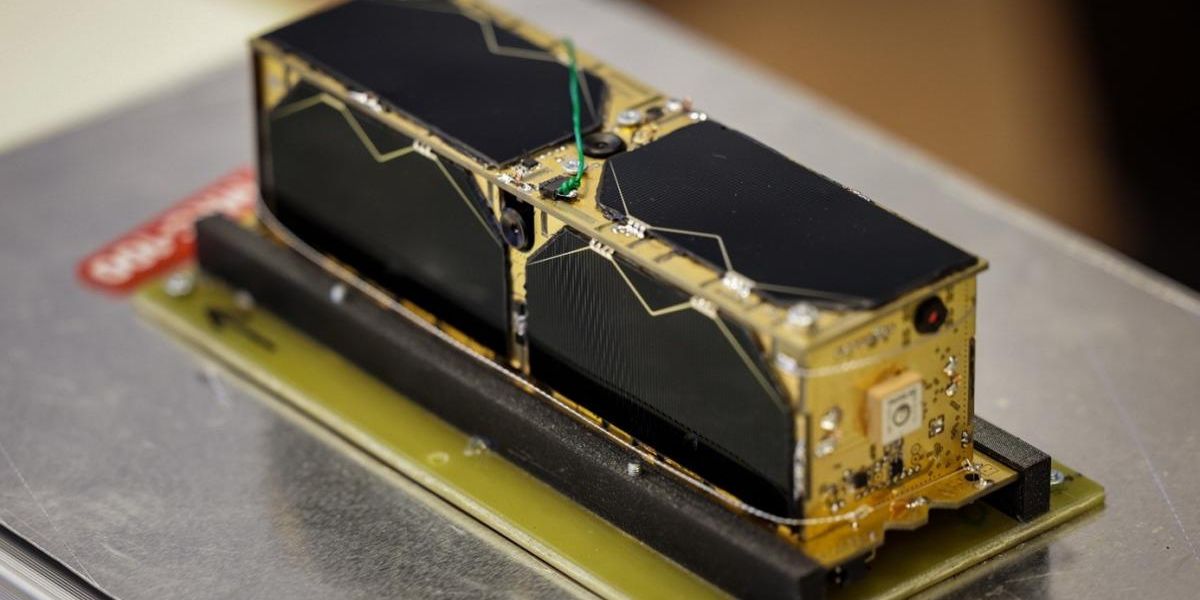
The small satellite with a size of 5x5x15 centimetres was built by teachers, researchers and students of the BME Department of Broadband Communications and Electrical Engineering in a three-year joint work. Its name MRC-100 was given in honour of the University Radio Club (Műegyetemi Rádió Club), which will be 100 years old in 2024.

The small satellite will study the electrosmog around the Earth

The new spacecraft, which will study electrosmog around the Earth, has a position stabilisation system in addition to the sub-units ensuring the correct operation and the equipment responsible for testing the electrosmog.

In addition to independent experiments carried out at three other universities—the University of Szeged, the Széchenyi István University in Győr and the University of Debrecen—, the measuring instruments of H-Ion and 27G Ltds will also be sent into space on board of the small satellite – BME said in a press release.

The small satellite with a size of 5x5x15 centimetres was built by teachers, researchers and students of BME in a three-year joint work.(Photo: BME)

The launching costs were covered by the American ARDC (Amateur Radio Digital Communications) foundation. The condition of the grant was that the MRC-100 study the electrosmog around the Earth in a wide frequency range.

The most significant Hungarian supporters of the project were the National Media and Infocommunications Authority and the Ministry of Foreign Affairs and Trade.

Falcon-9 rocket will carry the small satellite into outer space

[kiemelt]The satellite is expected to be launched into outer space in May from the United States by a Falcon-9 rocket developed by SpaceX, the space company of Elon Musk, American business magnate.[/kiemelt]

MTI also reports that the MRC-100 is the fifth and largest satellite in the SMOG series, launched in 2013 and developed at BME. As part of the project, the SMOG-P pocket satellite was launched in December 2019 and completed its mission at the end of September 2020. Based on the measurement results, the first electromagnetic pollution map was created, which showed the electromagnetic effect of digital terrestrial TV broadcasting.

About a month ago, we reported that a rocket development team of engineering candidates from BME has been ranked in the top 10 in Europe’s most prestigious university rocket launch competition.

Hungarian universities launch joint training programme with Seoul’s Chung-Ang University

The following six Hungarian universities have signed agreements with Chung-Ang University (CAU) in late November:

  • Eötvös Loránd University
  • Óbuda University
  • Semmelweis University
  • Széchenyi István University
  • University of Miskolc
  • University of Szeged

Long-term goal: a South Korean campus in Hungary

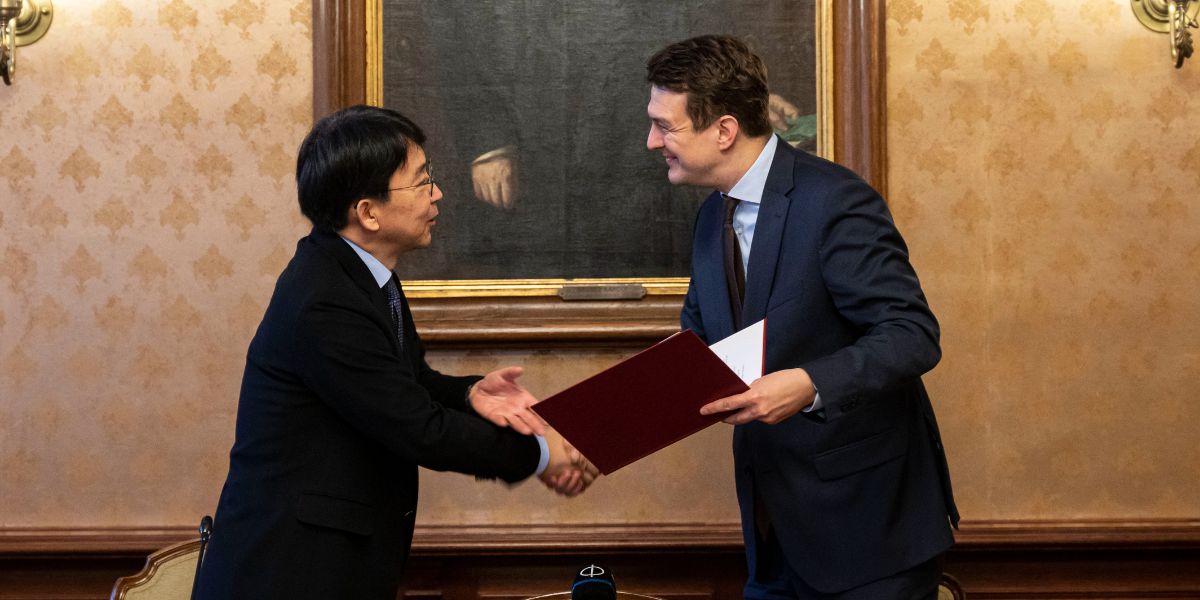
At the signing of the agreements in the Ministry of Culture and Innovation, László György, State Secretary for Innovation and Higher Education, recalled that

[kiemelt]Prime Minister Viktor Orbán and then South Korean President signed a cooperation agreement last autumn to establish a South Korean campus in Hungary.[/kiemelt]

The first step of this agreement is to launch a joint training programme with Chung-Ang University.

[kiemelt]The South Korean university has offered five doctoral courses in artificial intelligence to Hungarian universities,[/kiemelt]

the State Secretary said, according to MTI. The agreements were signed on behalf of CAU by its president, Sang-Gue Park. 

László György, State Secretary for Innovation and Higher Education and Sang-Gue Park, President of Chung-Ang University at the signing ceremony (Photo: MTI/ Zsolt Szigetváry)

László György added that CAU is among the ten South Korean universities whose courses in artificial intelligence are supported by the South Korean government. Founded in 1916, the university has about 32,000 students and R&D revenues of more than HUF 70 billion this year.

Study exchange programme with Óbuda University

Óbuda University, one of the Hungarian institutions which signed the cooperation agreement, said in a press release that it will offer a PhD place and a scholarship to a South Korean student at the Doctoral School of Applied Informatics and Applied Mathematics as part of the student exchange programme. In return, a student from Óbuda University will be admitted to the CAU Graduate School’s Department of Artificial Intelligence (AI).

CAU has been ranked 601-800th in the world in this year’s Times Higher Education (THE) overall university rankings, and 401-500th in both engineering and computer science in this year’s THE rankings by subject. For comparison, the overall THE rankings of Hungarian universities signed cooperation agreement with CAU:

  • Semmelweis University: 201-250.
  • Eötvös Loránd University: 601-800.
  • Óbuda University: 1001-1200.
  • University of Szeged: 1001-1200.
  • University of Miskolc: 1501+
  • Széchenyi István University: not ranked, listed as reporting university

Yale University professor among the world’s most cited Hungarian researchers

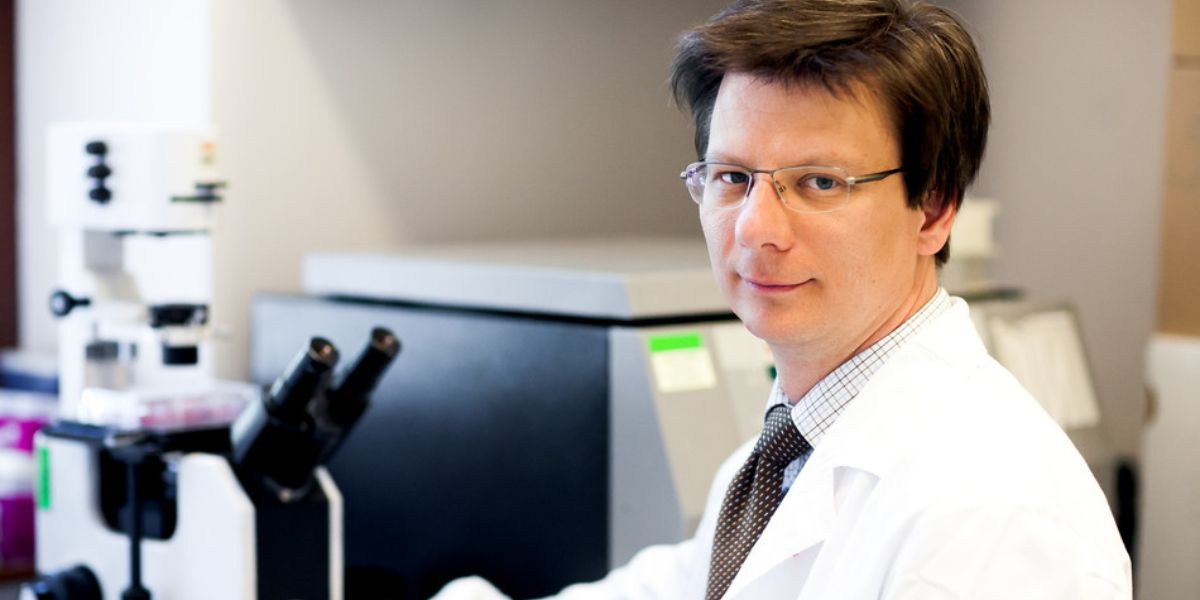
Earlier, we reported that four Hungarian scientists have been included in this year’s list of the world’s most cited researchers. But in fact, five scientists working in Hungarian institutions have made the list of nearly 7,000 scientists, since Tamás Horváth, research professor at the University of Veterinary Medicine, also among the elite.

[kiemelt]Previous news reports did not mention Tamás Horváth because the database of Clarivate, the British-American analytical company that compiles the list of the most cited researchers, does not list the University of Veterinary Medicine as Tamás Horváth’s main institution, but Yale University, so the Hungarian researcher is included in the list of American scientists.[/kiemelt]

Tamás Horváth graduated as a third-generation veterinarian in 1992

The University of Veterinary Medicine (ÁTE), however, informed MTI that research professor from the ÁTE Department of Anatomy and Histology is also on the list. In connection with Tamás Horváth’s professional career, MTI points out that he graduated as a third-generation veterinarian in Budapest in 1992, and then obtained his PhD degree in biological sciences in Hungary.

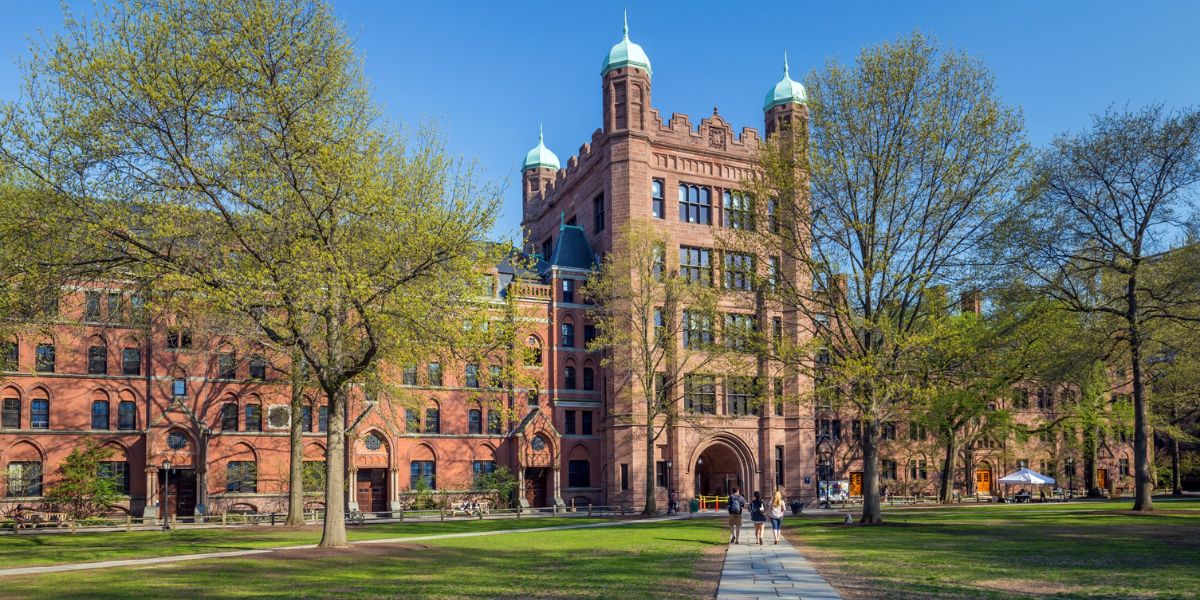
The building of Yale University building in New Haven, Connecticut (Photo: 123rf)

The list of the most cited scientists and social scientists is published annually by Clarivate, a British-American analytical firm. Since 2014, the international database Web of Science, which covers 21 scientific disciplines, has been used to aggregate scientific publications with up to 30 authors and the citation rates received for them.

[kiemelt]The editors of the list ranked the most highly cited articles published between 2011 and 2021, i.e. those publications that ranked in the top 1 per cent in their field by number of citations.[/kiemelt]

Five Hungarian scientists among the most cited researchers

In addition to Tamás Horváth, as we previously reported, four other Hungarian scientists working in Hungarian institutions have been included in the list:

  • Péter Ferdinandy (pharmacologist): Vice Rector for Science and Innovations, Director of the Institute of Pharmacology and Pharmacotherapy at Semmelweis University
  • Balázs Győrffy (bioinformatician): Head of the Department of Bioinformatics at Semmelweis University, Doctor of the Hungarian Academy of Sciences (MTA)
  • Zsolt Demetrovics (psychologist, addictologist, cultural anthropologist): Professor at the Faculty of Education and Psychology, ELTE, Corresponding Member of the Hungarian Academy of Sciences (MTA), Chair at Centre of Excellence in Responsible Gaming, University of Gibraltar
  • Attila Szolnoki (physicist): scientific advisor at the Institute of Technical Physics and Materials Science at Centre for Energy Research, Doctor of the Hungarian Academy of Sciences (MTA)

Four Hungarian scientists among world’s most cited researchers

The list of the most cited scientists and social scientists is published annually by Clarivate, a British-American analytical firm. Since 2014, the international database Web of Science, which covers 21 scientific disciplines, has been used to aggregate scientific publications with up to 30 authors and the citation rates received for them.

The editors of the list ranked the most highly cited articles published between 2011 and 2021, i.e. those publications that ranked in the top 1 per cent in their field by number of citations. In the scientific world, citation, i.e. the number of citations to research-based publications, is the measure of scientific impact. The more highly cited a discipline is, the more highly cited publications are needed to get someone mentioned in the rankings, Semmelweis University said in a press release.

Two researchers from Semmelweis and one from ELTE are on the list

This year’s list includes nearly 7,000 researchers, or about one thousandth of scientists from 69 countries. They are the ones who have made the biggest impact on the world’s scientific community, according to the citation data. Four scientists from Hungary are on the list:

  • Péter Ferdinandy (Pharmacologist): Vice Rector for Science and Innovations, Director of the Institute of Pharmacology and Pharmacotherapy at Semmelweis University
  • Balázs Győrffy (bioinformatician): Head of the Department of Bioinformatics at Semmelweis University, Doctor of the Hungarian Academy of Sciences (MTA)
  • Zsolt Demetrovics (psychologist, addictologist, cultural anthropologist): Professor at the Faculty of Education and Psychology, ELTE, Corresponding Member of the Hungarian Academy of Sciences (MTA), Chair at Centre of Excellence in Responsible Gaming, University of Gibraltar
  • Attila Szolnoki (physicist): scientific advisor at the Institute of Technical Physics and Materials Science at Centre for Energy Research, Doctor of the Hungarian Academy of Sciences (MTA)

Balázs Győrffy, Head of the Department of Bioinformatics at Semmelweis University (Photo: Attila Kovács – Semmelweis University)

Péter Ferdinandy and Attila Szolnoki have been included in the list of most cited researchers for the fifth time this year. Péter Ferdinandy was ranked in the pharmacology and toxicology category in 2014 and 2017. This year and the previous two years, he was ranked in the cross-field category. Attila Szolnoki is also included in the cross-field category this year, as he was in 2018, but ranked in the physics category between 2019-2021.

Another professor from Semmelweis University, Balázs Győrffy, who was included for the first time this year, is also ranked in the cross-field category. Zsolt Demetrovics, professor from ELTE, is also on the list for the first time among the most cited researchers in the psychiatry and psychology category.

The citation rate is one of the main evaluation criteria in the various university rankings. Read about the rankings of universities in Hungary this year here:

Semmelweis stands out again: 43rd in the world in cardiology

ELTE and Semmelweis among the world’s top 200 universities

Semmelweis is the first Hungarian university among the top 250 in the world

ELTE among the world’s best universities in nine academic subjects

Four Hungarian universities in the Shanghai rankings of the world’s best universities

SZTE was again ranked as the best Hungarian university in QS list

Such a training programme has never been launched in Hungary

The launch of the training is justified by the fact that a large number of technology-intensive R&D companies in Hungary and abroad are looking for professionals with natural science and engineering skills who can engage in creative R&D tasks, the BME said.

BME predicts that physics and engineering graduates will immediately get a job after leaving the university. In its press release about the launch of the new training, the university mentions several large companies (Bosch, Semilab, 77 Elektronika, Femtonics, Furukawa Electric, Magnetec) where physics engineering students can start their careers as interns during their training.

BME predicts that physics and engineering graduates will immediately get a job after leaving the university (Photo: BME)

The new bachelor training programme will focus on these areas:

  • Semiconductor technology
  • Sustainable Energy
  • Data Science
  • Nanotechnology
  • Materials Science
  • Medical devices
  • Artificial Intelligence
  • Quantum technology
  • Nuclear technology
  • Optics and photonics
  • Computer modelling

Market-oriented specialisations will be available in the following areas:

  • Nanotechnology and quantum applications
  • Nuclear technologies and sustainable energy
  • Natural sciences data analysis

We recently reported that BME became the best Hungarian university in the field of employer reputation in this year’s Quacquarelli Symonds (QS) World Higher Education Ranking. 

Five useful tips for new university students

1. Attend your classes!

Many people make the mistake of thinking that they can just attend their compulsory practical classes and skip the theory lectures.

Believe me: when the exam period comes, you’ll thank yourself for attending these classes instead of (or in addition to) partying or having fun until dawn, because not only will your knowledge be deepened, but you’ll also be more sympathetic to the exam teacher.

2. Don’t buy new textbooks!

It’s worth saving money where you can. Unless you’re studying a major where the curriculum can change from year to year – law, for example – it’s pointless wasting your money on buying the latest edition of every textbook in every subject.

The first thing you should do is to check whether the textbook you are looking for is available online in PDF format. If not, upper-year students will be happy to sell their own previous textbooks for much less.

3. Start preparing for the exams on time!

When beginning in September, many students think that the exam period starting in December is so far away that they simply don’t focus on it in time: they would rather spend their time partying or doing student work. Manage your time consciously, prepare continuously and it will be much easier to perform.

4. Pay more attention to your health!

You’ll have to give small lectures and presentations, as well as write assignments and final papers. Moreover, during the exam period, you will have to „take it all on the chin”.

But you shouldn’t let the increased pressure come at the cost of your health: for example, sleep deprivation, stress and caffeine overdose to characterize this period. Get enough rest and make sure you stay hydrated and eat quality, vitamin-rich foods.

5. Join clubs, workshops and vocational colleges.

If you join a school club outside of your compulsory classes, you will not only gain new skills, but you will also make new friends and contacts who may help you in later life, even in the job market, to find a career. These days, there are plenty of interesting programs to choose from at any university.


Picture:pixabay.com